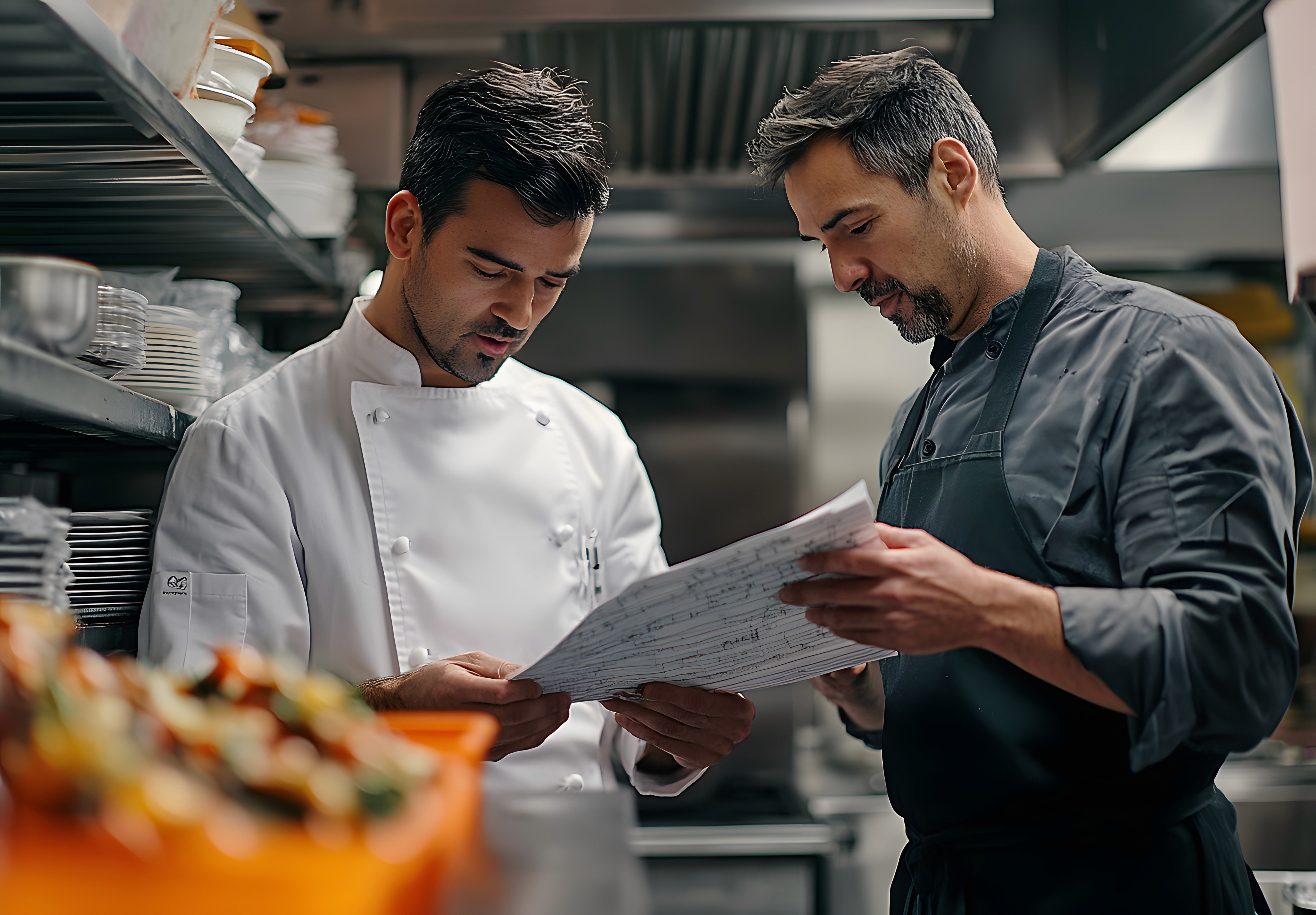
Why is restaurant inventory management important?
Inventory management, or lack thereof, can result in leaking finances and affect your revenue management strategies.
Reduces food waste
An inventory system helps you reduce food waste by identifying your most frequently-ordered dishes. These systems also help you log in new inventory and quantities.
Optimizes costs
By identifying your most in-demand dishes, you can reduce the quantities of rarely-ordered food items and cut costs.
Ensures accurate financials
In the hospitality industry, where profit margins are often tight, accurate inventory records are vital.
Enhances operational efficiency
Restaurant inventory management software saves your staff hours of time, allowing them to focus on your guests and delivering delightful dining experiences.
Improves customer satisfaction
When guests order food but are told the item isn’t available, it’s a lost sale. Inventory management means being able to pinpoint guest preferences and maintain top ordered items.
Saves hours of labor
According to Supy.io, “restaurant inventory management systems can save F&B operators over 40 hours of labor each month.” They can also boost profitability by up 32%.
Best inventory management software for restaurants
Supy
Based in the Middle East, Supy boasts offices in the UAE, Saudi Arabia, Australia, and the UK.
Supy is a data-driven inventory management software designed for multi-location restaurants.
Their top inventory features include real-time visibility, automated ordering recommendations, parallel stock counting, and advanced analytics.
Pricing: Supy offers 3 paid plans of inventory solutions, Basic, Premium, and Enterprise. However, they do not display pricing for any of those plans. There is no free trial available.
Foodics
Saudi-based Foodics is a leading F&B point-of-sale (POS) system that offers inventory management and tracking, among other solutions.
Over 30,000 restaurants use Foodics’ POS, inventory management system and other restaurant management features.
Pricing: Foodics doesn’t offer independent pricing for its inventory management solution. Its starter plan begins at around $59 per month.
LightSpeed
Founded in Montreal, Canada in 2005, Lightspeed has teams spread across North America, Europe and Asia Pacific.
LightSpeed offers a comprehensive POS and inventory management system for restaurants.
Pricing: LightSpeed offers 3 pricing plans. Their basic plan amounts to $109 per month for one location and includes 1 register.
MarketMan
MarketMan is a cloud-based inventory management and purchasing platform that simplifies back-of-house operations.
Pricing: MarketMan offers 3 pricing plans. Their Starter plan begins at $199 a month.
Crunchtime
One of the oldest inventory management solutions is Crunchtime. Launched in 1995, Crunchtime Information Systems Inc. offers web-based back-of-house solutions.
Popular Crunchtime users include Chipotle, Domino’s, Dunkin’, and Five Guys.
Pricing: Crunchtime doesn’t share its pricing structure on its website.
Restaurant365
Founded in 2011, Restaurant365 is a restaurant management system that offers inventory management solutions to over 40,000 locations.
Pricing: Billed quarterly their Essential plan amounts to $499 a month and includes accounting, labor, inventory management, and POS, vendor, and bank connections.
Restroworks
Restroworks is a leading cloud-based restaurant technology platform that powers over 20,000 restaurants in 50+ countries.
Pricing: Restroworks doesn’t share its pricing structure on its website.
How to choose a restaurant inventory system
Easy to integrate with other solutions
It’s important you use an inventory management solution that integrates with other software.
Has multiple services within a single platform
You may have noticed how restaurant inventory systems are tied to POS solutions. This is important because when your cashier or server logs in a new order, it automatically notifies inventory and your numbers change.
Has robust reporting features
Without strong reporting, you might as well not have an inventory solution. Reporting helps you identify trends, consumer behavior, and can help you plan seasonal menus and dishes.