Understanding and managing your restaurant’s table turnover can be the difference between long waitlists with unhappy guests and repeat business that helps you thrive.
Table turnover is one of the most important metrics and analytics for restaurants.
Read on to understand what table turnover is, why it matters, how to measure it, and how to improve it.
What is table turnover?
Restaurant table turnover measures the time a group of guests occupies a table. The faster you turn tables, the higher the number of guests you serve, which means more revenue.
However, it’s important you don’t make guests feel unwelcome in a bid to increase your table turnover.
How to calculate table turnover?
To calculate your restaurant’s table turnover rate, start by selecting a specific time period. Then, divide the total number of guests served (covers) during that time by the number of tables that were occupied.
If a restaurant has 50 seats and serves 300 guests in 10 hours, the table turnover rate would be: 300 guests divided by (50 seats x 10 hours) = 0.6
Why is table turnover important in a restaurant?
Measuring your restaurant’s table turnover offers insights about your daily business operations. It can help you
- Understand guests’ behavior
- Uncover your busiest days
- Optimize seating capacity
- Identify challenges for your in-house staff
- Reduce waitlists
- Improve guest experiences
- Analyze weaknesses to make better decisions
What is the average restaurant table turnover rate?
Different F&B concepts have different table turnover rates.
Research shows the average table turnover rate for a family restaurant, between 5 pm and 10 pm, is 3. This means each seated table takes about 1 hour and 30 minutes.
In fine dining restaurants, the average table turnover rate tends to be longer, lasting up to 2 hours per table.
The average table flip rate for a casual dining concept stands at 1 hour and 15 minutes.
Taking it too far or optimizing table turnover?
One high-end Dubai restaurant seems to have taken their restaurant table turnover to a new level. Nobu in Dubai’s Atlantis, The Palm, informs guests beforehand of the time allotted to them and their reservation.
For example, a table of one gets 1 hour and 45 minutes, while 2 to 4 guests get up to 2 hours. Groups of 5 to 7 guests get up to 2 hours and 30 minutes, and any groups of 8 or more “are welcome to stay beyond 3 hours.”
How to increase table turnover at a restaurant?
1. Use a reservation and table management system
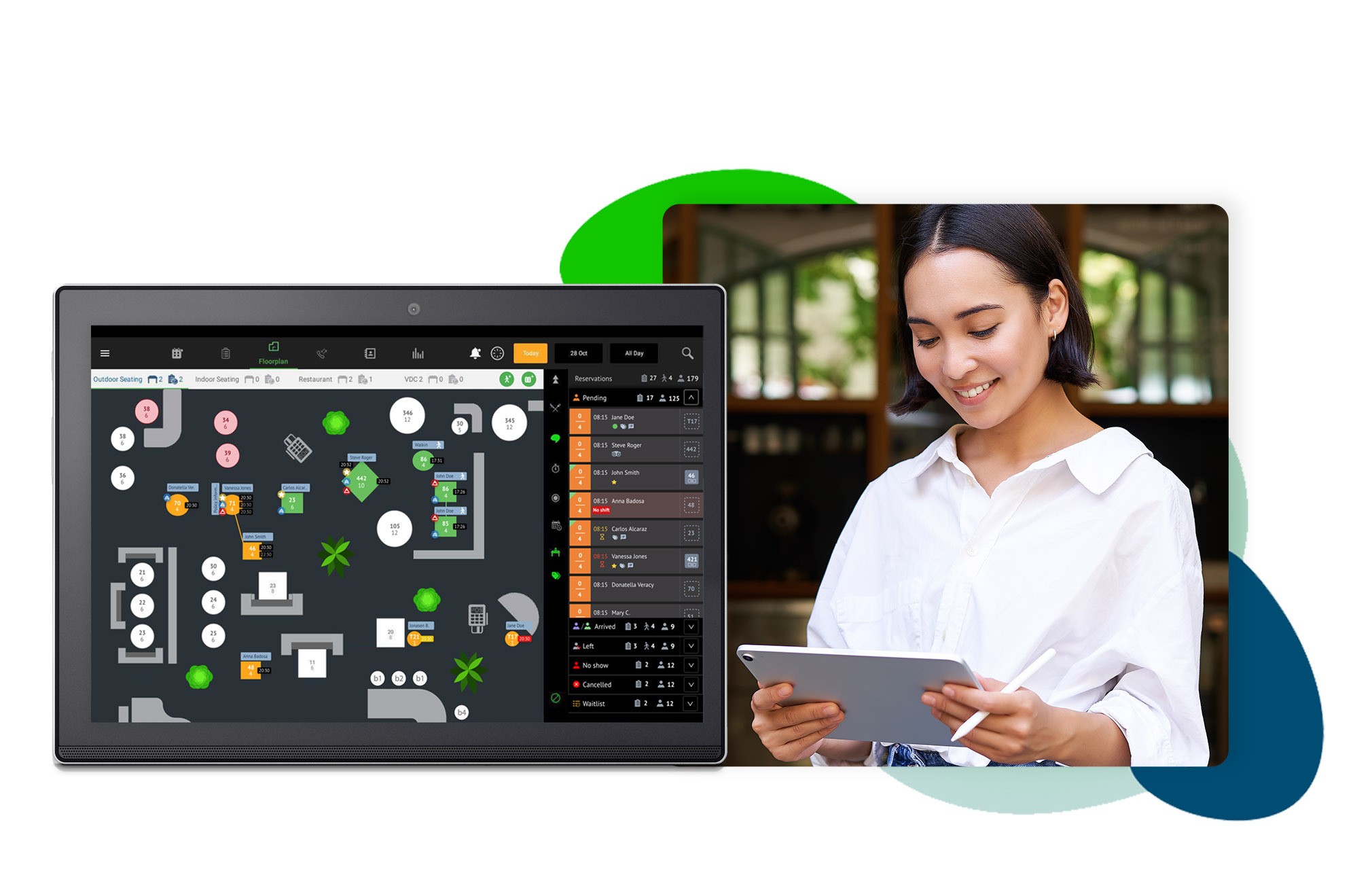
A restaurant reservation system, like Servme, allows you to efficiently handle bookings from multiple channels. Table management systems come with restaurant floor planning software enabling you to optimize your restaurant layout and seating arrangements.
2. Make the most of your POS system
Use a restaurant point-of-sale (POS) system that’s compatible with your reservation system. Combined with your reservation system, you get detailed POS reports.
3. Use Waitlist management software
Queue or waitlist management software helps you manage your waitlists. Many reservation systems, including Servme, come with waitlist management features.
4. Give guests access to your digital menu beforehand
One way to increase your table turnover rate is to get guests to view your menu before they’re seated. This will help guests decide what they want to eat faster.
5. Use bill-splitting options
One of the most common reasons for a slow table turnover, especially with group bookings, is when the bill arrives. Bill-splitting saves the staff time, relieves guests, and speeds up operations.
6. Train your team to use your restaurant software
Part of turning tables faster is knowing that it’s an ongoing learning process. Train your team to use your restaurant management system and its features.
7. Don’t seat incomplete parties/groups
Most guests like to wait for the rest of their group before they put in their order. Don’t seat incomplete groups or parties.
8. Suggest foods that can be quickly prepared
When guests are wavering between two dishes, suggest the one that’s quicker to prepare in the kitchen. This strategy is particularly useful during peak hours.
9. Improve efficiency with shift management
Manage your team’s shifts based on your restaurant’s peak days and hours.
10. Consider a smaller menu
Research shows that presenting customers with fewer options reduces confusion and speeds up decision-making. When one group was presented with 24 varieties of gourmet jam, while another got only 6 varieties, 30% of the group with limited options made a purchase versus only 3% of the larger group.
11. Prepare some items in advance
Save time for your hosts, servers, and kitchen staff by preparing certain items ahead of time. Prepping sauces and filling ramekins with sauces, garnishes, and dressings can save time.
Keep dining experiences memorable
One thing to remember about restaurant table turnover times is that you want to create a memorable dining experience for your guests. It’s not just about flipping tables and getting to the next guests.
Want to see how Servme can help you increase table turnover, elevate guest experiences, and boost retention? Book a personalized demo and try it yourself.
![7 Best Restaurant Reservation Systems Compared [for 2026]](https://dev1servme-thinkpad-l15-gen-1.tail507714.ts.net/wp-content/uploads/2026/05/KD96TllNLGZ0UHt3Mzbx3bkOibQ.jpg)