Every restaurant owner dreams of growing their business into a multi-location restaurant or chain.
The more restaurant locations you add, the more guests you can serve, and the more revenues and profits you can make.
However, adding new restaurant locations comes with many challenges. Chief among them is being able to manage those multiple locations or venues.
So, how do you manage a multi-location restaurant? We’ve gathered the top tips for managing multiple locations and venues effectively.
What is a multi-unit restaurant?
A multi-unit restaurant or multiple location restaurant is an F&B concept with several branches or venues. These branches can be in the same city, governorate, or country.
A restaurant with several locations can be referred to as a chain or restaurant group. Alternatively, an F&B group often refers to a company managing multiple restaurant brands or chains.
Challenges of managing multiple restaurant locations
Before we explore the tips, let’s first pinpoint the top challenges operators face when trying to manage multi-location restaurants.
Communication issues
Let’s face it. Communication is a big problem for companies in every industry. Restaurants are no exception. Especially, if your operations grow beyond a single location.
Weak or unclear communication between management, vendors, and staff can result in mistakes, which can affect guest satisfaction and overall profitability.
Having many pen-and-paper operations
Many restaurants still operate using pen-and-paper. Whether it’s taking down names for waitlists, creating a to-do list, writing general notes.
With pen-and-paper, there will likely be too many mistakes, incorrect orders, and lost information. Not to mention missed opportunities, unhappy guests, and no centralized system for guest information.
Inventory management
A big challenge for many restaurants, whether single-location or multi location restaurants, is inventory management.
Multi-location inventory management requires knowing and managing suppliers, vendors, and purchase orders. You need a process to manage orders and delivery, re-stocking ingredients, tableware, and more.
Lack of a centralized CRM system
One challenge restaurant operators realize they have, albeit too late, is the lack of a centralized customer relationship management (CRM) system.
A centralized guest CRM helps you collect guest information and manage this data across your restaurant’s multiple locations.
Dining concepts using Servme can also collect information, such as dietary restrictions, allergies, and guest notes. Reservation managers say the guest notes feature is their favorite feature as it helps them tailor the guest experience.
No table management system to manage floor plans
Managing multiple restaurant locations means having to manage different floor plans. It’s impossible to manage all these floor plans without an effective table management system.
Costly, worn-out printed menus
Another big challenge for multi-location restaurants is the cost of creating and printing menus. Print menus wear out easily.
Marketing challenges
A major challenge for restaurants with multiple locations is consistent branding and marketing. As the number of venues increases, so do advertising and promotional budgeting challenges.
How to manage restaurants with multiple locations
Now, let’s explore the top tips for managing a multi-location restaurant, whether it’s in the same city, country, or across geographies.
Write down daily tasks for every team
The first step in managing multiple restaurant locations effectively is to have clear roles and job descriptions. Every team needs to know what is required of them as a team and as members of that team.
Create a business plan for your new location(s)
Treat every new dining location as a new business and create a business plan for that location.
Consider working with an F&B consultant or agency to help you create this business plan.
Create a restaurant marketing strategy for each venue
To grow your restaurant business, your marketing efforts need to be efficient.
As an owner or operator of multiple restaurant locations, you need to create a restaurant marketing strategy for each venue.
Hire the right team for each location
Finding the right team is imperative for managing a successful restaurant. It’s important your team has the relevant experience you need to work smoothly and offer guests a great experience.
Offer standard training for staff
Besides finding the right hires for your restaurant chain, offer standardized training for your team across all locations.
Research has found a strong link between employee experience and revenue in customer-facing roles. According to the Harvard Business Review, “companies that score well on employee experience metrics can see a 50% revenue boost.”
Use a robust, centralized CRM
Using a restaurant CRM, like Servme, to collect guest information across your venues. Besides adding data, you can use this information for your restaurant’s marketing campaigns, including email and SMS.
If you’re using Servme, you can also use the auto-tags feature to add tags to guests such as top spender, frequent no-show, corporate, and more.
Use restaurant management software with integrations
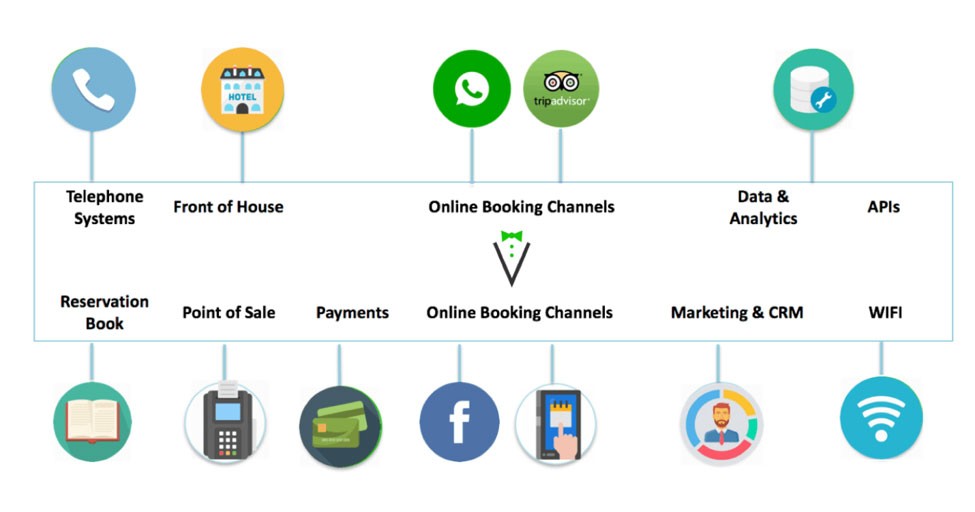
A restaurant reservation system, sometimes referred to as a restaurant management system, helps you manage different aspects of your restaurant.
For example, Servme integrates with property management systems (PMS) used by hotels, point-of-sale (POS) systems, online booking channels like Tripadvisor and Zomato, among others.
Servme also lets restaurants get direct reservations through Facebook and Instagram.
Use waitlist management software
Whether you’re managing a single concept or several restaurant locations, you need to use a waitlist management system.
If you’re using Servme, you can use WhatsApp to speed up communication with your guests.
Train your team to use your software
Train your team to use the software you’re using in your restaurant chain. It’s worth mentioning that one of the biggest perks of using Servme is that we train restaurant staff on how to use the software. Our training is always free.
Build a website for your restaurant
Growing your business means expanding in several ways. This includes building a website for your restaurant chain.
Improve employee communications across all locations
Communication is key to the success of any business. One way we’ve streamlined communications for single and multi-location restaurants has been with the Manager’s Notes feature.
This feature lets restaurant managers share pertinent information with team members either in a single location or across the restaurant group.
Automate marketing and communications
Besides creating a restaurant marketing strategy, use marketing automation to speed up processes and communicate with your guests.
If WhatsApp is your guests’ preferred method of communication, you can create, manage, and automate personalized WhatsApp messages for each venue from your Servme dashboard.
Use automated guest surveys
No restaurant operator wants to learn that guests prefer one location over the other.
Research shows “32% of customers are likely to stop buying from a brand after one bad experience.” Even if they previously liked that brand.
Once a guest leaves your restaurant, they can get a notification via email, SMS, or WhatsApp asking them to review their latest experience.
Review detailed, relevant reports
To manage a group of restaurants successfully, you need to have strong reporting software in place. Consider using software that allows you to customize reports. Both options are available in Servme.
Digital menu software
An important feature or software to have as a multi-location restaurant is digital menu design software. If you’re a Servme customer, you can do this directly from your Servme dashboard.
Design and activate menus based on the time of day, season, or restaurant location.
Wrapping it up
It’s no surprise, managing multiple restaurant locations can be a hassle. But you can streamline various operations to save time, money, and clear away this headache so you can focus on running a successful business.
Servme can help you manage many of those operations from a single dashboard. From reservations, waitlist, and table management, to marketing to communications, and more.
Discover how Servme can help you. Book a personalized demo now.