Despite the world shifting to technology for almost everything, the restaurant and hospitality industries continue to rely on personal connection and personalization.
This personalization is one of the top ways hotels and restaurants build relationships and customer loyalty.
So, do we drop technology from the equation altogether? No, we don’t have to. Technology can help increase customer loyalty and retention in the restaurant industry.
Research by Sender found that “90% of marketers” believe personalization significantly contributes to profitability. In addition, it can improve marketing spend efficiency by up to 30%.
But that’s not all. Personalization can also decrease customer acquisition costs by as much as 50%.
But what does personalization look like? It usually comes in the form of personalized marketing, particularly personalized messaging and communication.
In this article, we’ll cover what personalization is, why it’s important, and what it looks like in the restaurant industry. We’ll also offer some tips on how to create personalized messages with WhatsApp.
What is personalization in marketing?
McKinsey defines personalization in marketing as “when seller organizations use data to tailor messages to specific users’ preferences.”
In other words, it’s that personal touch you give to your communication with guests. Personalization can be a powerful opportunity, or a tool, to create memorable dining experiences for your guests.
Done right, personalization can be the reason guests keep coming back to your restaurant or concept.
Why is personalization important?
According to research by Sender, “companies that thrive at personalization earn 40% more money” than average competitors.
Understanding customer preferences
To create a personalized marketing strategy, you need to learn more about your guests’ preferences and analyze this data. Collecting data such as order history, dietary restrictions, food preferences, favorite dishes or beverages, dining patterns, can all be used later to create personalized campaigns.
Tailored promotions and offers
Using data and personalization, you can tailor offers based on customer preferences. For example, you can send a personalized restaurant email campaign with a special promotion on a guest’s birthday, creating a sense of exclusivity.
Personalized communication
Using a person’s name in an email or SMS is the most common example of personalized communication. You can take it a step further and mention something personal based on data you’ve collected.
“Happy anniversary, Sarah!
One Orchid wishes you a splendid day with your loved ones. Join us between August 10-20 for a 20% off dinner for two.
Book your reservation here [add link]”
Enhanced customer experience
One way to improve guest experiences in your restaurant is by training guests to recognize and greet repeat customers.
Using a table management system with an advanced restaurant CRM can create that unique dining experience.
Data-driven marketing
Using the data collected from previous visits, restaurant operators can make decisions based on data.
Feedback and surveys
Restaurant surveys are a great way to collect data, reviews, and ensure guests are heard. If you’re using a reservation or seating management software, like Servme, you can send automated guest surveys.
What does personalization look like in a restaurant?
Personalized dine-in experiences
For a dine-in experience, a server or host may point out to a guest if a certain dish has an ingredient that’s in conflict with their allergy or dietary restrictions.
Personalized marketing
There are many ways to add personalization in your restaurant marketing strategy.
Sending a ‘Happy birthday’ message, or email, to a guest and offering them a special discount or free dessert, is a great example of a personalized restaurant marketing idea.
How to create personalization in your restaurant with Servme and WhatsApp
Using personalization in your restaurant can significantly enhance customer loyalty by creating a sense of individual value and connection.
One way to do so is using WhatsApp business for restaurants. WhatsApp is one of the most personal and direct ways to connect with customers. With over 2.78 billion monthly active users worldwide, WhatsApp is the world’s leading communication platform.
Compared to email and SMS, “WhatsApp boasts an open rate of 98%.”
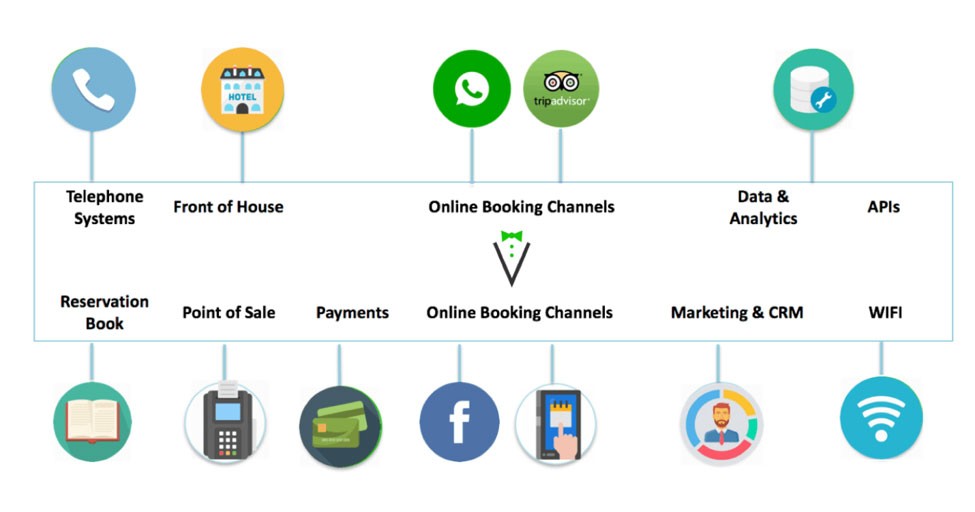
Using WhatsApp Business in combination with Servme’s reservation and guest experience management software, F&B concepts can:
- Automate guest communications including reservations, confirmations, cancellations, and reminders
- Create and customize WhatsApp marketing templates
- Preview and send test messages before sending them to guests
- Share payment links for reservation deposits and prepayments
- Automate sending guest surveys
- Help guests find your venue by sharing Google Maps location links
- Personalize their Sender ID with restaurant image and logo
However, that’s not all WhatsApp Business for restaurants is good for. Coupled with Servme’s reservation system, you can combine all WhatsApp business features with your restaurant’s CRM and guest profiles. You can also benefit from Servme’s auto-tagging feature to further personalize messages.
Auto-tags are tags servers and hosts add to guests’ profiles as means of segmentation. They are like pre-defined attributes automatically added to a guest profile when guests make certain actions.
Using WhatsApp business, Servme, and auto-tags, you can create a complete personalized messaging strategy for your restaurant that increases sales and boosts retention.
Just make sure you have your guests’ approval to send WhatsApp marketing messages so they don’t label you as spam.